What Is a Birth Chart, Really?
If you have ever looked up your birth chart and felt immediately overwhelmed (or, conversely, immediately reduced), you are not alone.
Most people encounter astrology through their Sun sign: a single symbol, a handful of traits, maybe a horoscope column in a magazine, or a meme that focuses for five seconds on your superpower or villainy. It can feel either too vague to be useful or too specific to be true. And somewhere in the middle, a deeper question gets lost.
That question is this: What is a birth chart actually for?
The answer, from an evolutionary astrology perspective, is both simpler and more profound than most people expect.
It is not what you probably think it is
Let's start with what a birth chart is not.
It is not a fixed identity. You are not defined by your chart… you are in relationship with it.
It is not a prediction. No birth chart can tell you what will happen.
It is not a destiny. There is no placement in your chart that seals your fate.
It is not a personality label. Your Sun sign is one aspect of a much larger story.
These distinctions matter, because the moment we treat the chart as any of these things, it stops being useful. It becomes either a cage or a parlor trick.
Evolutionary astrology asks something different of it entirely.
What a birth chart actually is
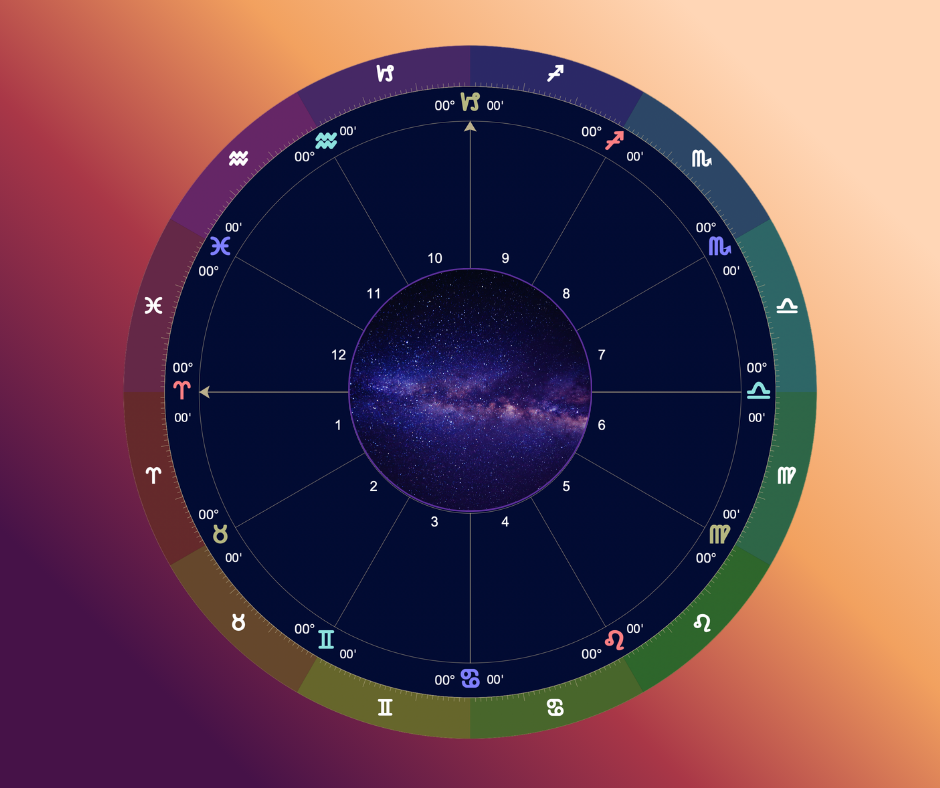
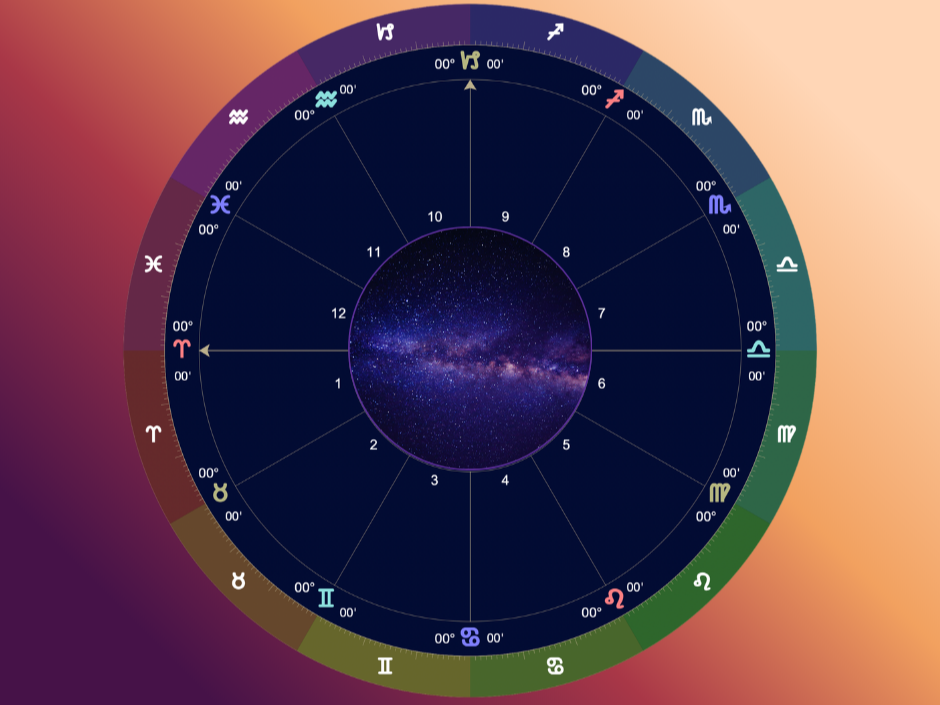
A birth chart, also called a natal chart, is a symbolic snapshot of the sky at the exact moment you were born, including the positions of the planets, the zodiac sign rising in the east, and the orientation of everything else in relation to that specific place and time. But what that orientation means is what distinguishes one astrological tradition from another.
In evolutionary astrology, a birth chart is:
A karmic blueprint carrying patterns and unfinished business that preceded this lifetime, whether you frame that as past lives, genetics, or psychological inheritance.
A psychological pattern describing the interplay of drives, needs, and tensions that shape how you tend to move through the world in this lifetime. It reflects your instincts and emotional defaults.
A developmental path toward your happiest, most fulfilled self, filled with possibility, potential, and a clear direction for growth.
The birth chart is a living map of all three. One you can return to repeatedly across a lifetime, and discover something new each time.
The four components of a birth chart…and what they tell you
When you look at your birth chart, there are four integrated components, each answering a different question about your life and psychology.
The signs are archetypal human motivations, each with its own set of distinct intentions that can be expressed in a positive or negative way. Signs are not personality types. They are evolutionary directions. Aries points toward action and self-definition. Scorpio wants depth and transformation. Pisces seeks transcendence. This forms the foundation, or backdrop, of the chart. Every one of us is made up of all twelve zodiac signs.
The planets are psychological functions. Distinct voices within the psyche, each with its own agenda and developmental arc. The Sun organizes your sense of identity. The Moon governs your emotional needs. Mars drives your capacity for courage and action. Pluto carries the energy of deep transformation. These are not events happening to you from the outside. They are parts of your psychological makeup asking to be consciously integrated. A planet in a sign tells us what that part of the psyche is seeking (the planet) and why (the sign).
The houses are life arenas. The twelve domains where your energy plays out in the world. Career, relationships, creativity, home life, spiritual surrender. Each house describes a different context, a kind of experience, and a developmental axis when paired with the house directly opposite it. Houses are where the planets and signs carry out their agenda — seeking expression in the context of daily, lived experience.
The aspects are internal “conversations.” The geometric relationships between planets that describe how your psychological drives negotiate with one another. A square creates friction and growth. A trine creates ease or flow. An opposition creates polarity and tension. None of these are inherently good or bad. They are all, at their core, about integration of disparate energies seeking wholeness.
When you read a birth chart, you are reading a living psychological system. Not a list of traits, but a network of interacting drives that describe how you function (with all of your blessings and challenges), how you might grow, and where your life is asking you to evolve.
The questions that actually matter
Most people approach astrology with the question: What is going to happen?
Evolutionary astrology replaces that question with something more useful:
What patterns am I working with?
What am I here to learn?
How do I grow into myself more fully over time?
This shift from prediction to awareness is the heart of what makes evolutionary astrology different. Awareness changes outcomes, always.
The chart does not tell you what kind of day you must have. It gives you a sense of what to prepare for: the inner terrain, the developmental themes, the moments when the sky is asking something specific of you. As my mentor, the late Barbara J. Junceau, wrote: "Your life is not about what is going to happen. It is about how you respond to what does happen…It is about your habits of consciousness, and how you can change them."
That is how I approach your birth chart.
A few principles worth understanding
Before you spend much time with your chart, there are a handful of guiding principles worth understanding that I adapted from Steven Forrest's foundational work, The Inner Sky, which I highly recommend:
Astrological symbols are neutral. There are no good or bad placements…only energy expressing at different levels of awareness.
You are responsible for how you embody your chart. Awareness is always available. Nothing in this system is fixed.
Your chart shows potential, not your level of response to it. No astrologer can determine the quality or depth of your consciousness from your chart alone.
Astrological symbols are verbs, not nouns. You are not "a Scorpio." You are “Scorpioing.”
These principles matter because they keep the chart from becoming a fixed fate. The moment an astrological placement becomes a label, it loses its power to help you grow.
Where to go from here
If you are new to your birth chart, the best first step is simply to generate it on your own. You can do that for free at Astro.com.
Get familiar with the symbols. Notice what stands out. Notice what feels right. Notice what surprises you.
If you want a structured way to learn how the parts of your chart fit together as a living system, from the zodiac signs and houses through to the planets, aspects, lunar nodes, and timing, I created a three-part evolutionary astrology course, We Are All Made of Stars, with exactly that in mind. It is beginner- to intermediate-friendly, reflective, and grounded in the same evolutionary approach I bring to every reading I offer.
And if you are ready to explore your chart in conversation — to understand your specific patterns, your timing, and your developmental direction — I’d be delighted to work with you one on one.
“At its heart, evolutionary astrology is not about prediction or personality labels. It is about awareness. Agency. And the ongoing process of becoming more fully yourself.”
New to evolutionary astrology?
Start here for free.