A Values Check, Courtesy of the Sky

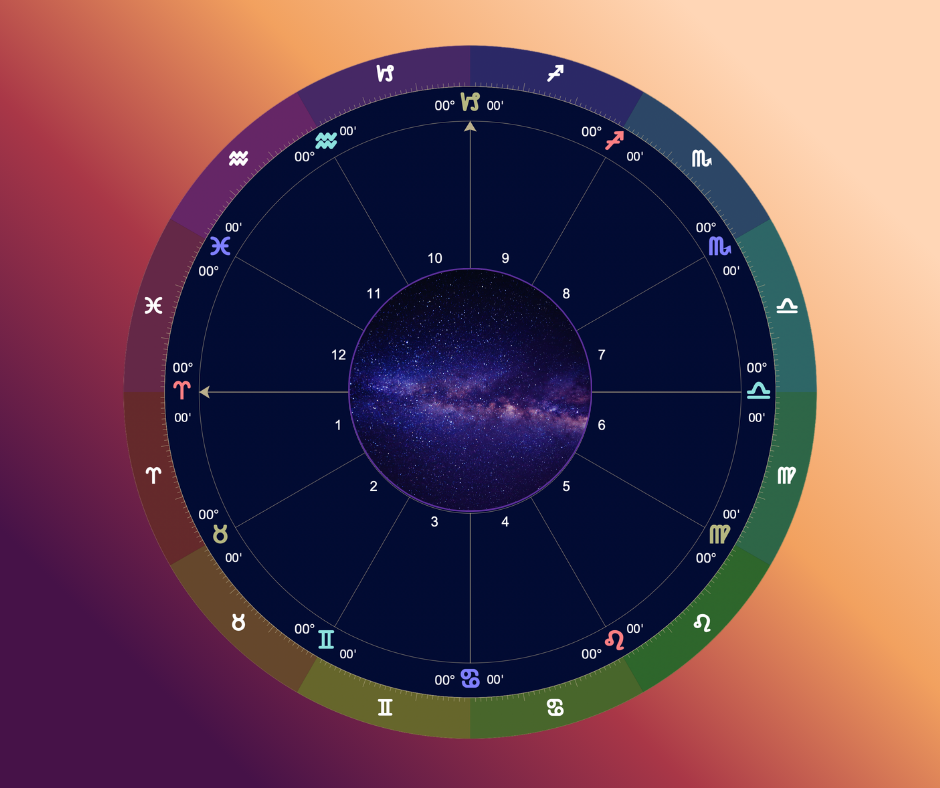
The sky is a mirror of the soul, and this month it's holding up something hard to look away from. The Lunar nodes shifted onto the Aquarius-Leo axis on July 26. About a week later, on August 3, Chiron stationed retrograde in Taurus. Two transits, both asking some version of the same question: what are you actually willing to look at, and who are you accountable to when you do?
I've been sitting with that question this week because of the recent news concerning Steven Forrest, a well-known elder in the astrological community.
I'm one of thousands of students who learned our craft (in part) through Forrest's books. I also trained through the Forrest Center for Evolutionary Astrology and have sat in live sessions with him. His teaching helped shape how I think about this work before I built a practice of my own. So when a moment from one of his recent podcast conversations went public and drew real criticism, I didn't come to it as an outsider with an opinion to hand down. I came to it as someone who owes part of his own foundational education to this person, watching him move through exactly the kind of moment the sky is asking all of us to sit with right now.
Here's what happened, briefly. Forrest used a racial slur during a podcast conversation. He apologized publicly. That apology has drawn further criticism for how it was framed. I'm not going to relitigate the specifics here. Anyone who wants the facts can find them.
What I want to talk about is the shape of the apology itself, because it's a near-perfect case study in the difference between owning something and defending yourself while calling it ownership.
A real apology names the impact, not just the intent. "I didn't mean it that way" answers a question nobody asked. The question was never about intent. It was about what landed, and on whom.
A real apology holds still under the discomfort instead of moving to end it. "Cancel me if you want" sounds like courage, but listen to what it's actually doing. It's centering on the speaker's fear of consequence, not the people who were affected. That's a subtle move, but it's a strong one. It turns the person who caused harm into the one asking for grace, before anyone else has had the chance to say what they need.
A real apology demonstrates that you understand why something mattered, not just that people got upset. There's a difference between "I'm sorry this bothered you" and "I understand what this word carries, and I understand why hearing it from me specifically was its own kind of harm." Only one of those is actually an apology.
There's something worth sitting with in the first ten minutes of that same podcast conversation (I believe at the time I’m publishing this, the podcast has been removed from YouTube). Ricky Williams asked Forrest directly whether a role model is someone who pretends they have no shadow, or someone people watch actually work with it. Forrest's answer was clear: a healthy role model is honest about the shadow, and willing to talk about the struggle of living with it. Williams went further, telling Forrest that what he's learned most from watching him is that when the shadow shows up, he doesn't back away. He holds it there and moves through it.
That's the standard Forrest set himself, in his own words, in that very episode. It's a good standard. It's just not the one his apology met.
I don't say any of this as a verdict on who Steven Forrest is. I've received real wisdom from his teachings, and that's part of why this is hard to write. I don't think one hard moment defines a person, and I'm not writing this to settle that question. I'm writing it because this is shadow work in real time, in public, at a scale most of us will never experience. I have compassion for him. And I have compassion for the thousands of people who were genuinely hurt by this moment. It's worth asking what we'd each do in that seat. My mom always told me, 'When you point your finger at someone else, there are three fingers pointing right back at you.' Words I'm taking to heart right now.
Because here's the truth none of us love sitting with: the moment your blind spot becomes visible to other people is not a moment you get to script. You don't choose when your shadow shows up. You only choose what you do once it has.
So ask yourself honestly. When you've been called out, what's your first instinct? To defend, or to actually look? Most of us default to defense (myself included), because looking costs something. It costs the story you've told about yourself. It costs the comfort of being the good one, the aware one, the one who already did the work. Chiron retrograde in Taurus is asking exactly that question right now: what have you built your sense of worth on, and what happens to that worth when it's challenged in public?
The nodes make the choice even more explicit. South node in Leo is the pull toward protecting the spotlight, defending the personal story, making sure you're still seen as the hero of it. North node in Aquarius is the harder, less flattering direction: setting the personal story aside long enough to actually account for your impact on the collective. Not because your individual story doesn't matter. Because for the next year and a half, the growth edge isn't in protecting it.
That's the values check. Not whether Steven Forrest handled this well or poorly. It's which node you're living from the next time it's your turn.
The north node in Aquarius is asking us for radical authenticity. It's also asking us to be held accountable by the collective, not just to ourselves. May we all move forward with more self-reflection and more grace.
Last note: I highly recommend everyone in our community, and honestly beyond it, watch this keynote address at NORWAC 2022 by Samuel Reynolds. It's a clear-eyed reminder of what real accountability can look like.