Astrology Off the Charts - Episode 1: Who We Are

Astrology Off the Charts is a podcast hosted by three professional astrologers: Alexander Mallon, Lisa Hagenbuch, and Ryan Barrett. As friends, lifelong students, and deeply curious humans, they explore astrology as a living language for understanding the self, relationships, and the patterns that shape a life. Rooted in a humanistic and consciousness-based approach, the show moves through conversation rather than certainty. Less interested in prediction and fixed answers, more interested in reflection, meaning, and the ways we grow through lived experience. Everything offered here is perspective, not doctrine.
Episode 1: Who We Are
In this first episode, Ryan, Lisa, and Alexander introduce themselves, their philosophy, and in many ways, each other. They trace how each of them found astrology, share what draws them to a humanistic approach, and explore the tension at the heart of the practice: fate versus free will. Along the way they discuss Dane Rudhyar's foundational influence on modern astrology, the difference between deterministic and healing approaches to chart reading, and what they each love (and least enjoy) about client work. A warm, wide-ranging conversation to kick off what promises to be a rich ongoing series.
Full Transcript
Ryan
Welcome to Astrology Off the Charts. We are three professional astrologers, friends, and lifelong students of the human experience exploring astrology through conversation, not certainty. This podcast is rooted in a humanistic and consciousness-based approach to astrology. We're less interested in prediction and fixed answers and more interested in reflection, meaning, patterns, relationships, and the ways we grow through lived experience. Everything shared here is offered as perspective, not doctrine. And we encourage listeners to use their own discernment, intuition, and lived experience as they listen. Our hope is simply to create thoughtful conversations that help people feel a little more connected to themselves, each other, and the mystery of being human. We're glad you're here. I am Ryan Barrett.
Lisa
I am Lisa Hagenbuch.
Alexander
And I'm Alexander Mallon. Nice to have you join us. It's wonderful to have Lisa and Ryan here. Thank you folks for coming together today for our first launch. This is really our maiden voyage for this production. I do want to share with the audience a little bit about humanistic astrology. As a separate entity in the studies and practices of astrology, it has its origins in the masterworks of one of the 20th century's greatest astrologers, Dane Rudhyar, a person well known to Western 20th and 21st century astrologers. He was a Theosophist, a famous modernist composer, and a painter. His compositions were Stravinsky-esque, very alternative and unusual in form. He illuminated the birth of a new form of astrological thought. His groundbreaking ideas shifted astrological theories from a prescribed fatalism toward an awareness of personal psychological growth and the human experience of self-actualization. That term, self-actualization, was a big concept in the 60s and 70s, particularly when Dane Rudhyar's work was really at its height.
Lisa
Definitely. Since this is our first time together, we thought it would be great to allow you, the audience, to get to know us all a little better through a round table of questions, just to kick things off so you can understand why we're here. What kind of cosmic convergence happened to draw us all together? For that, I'm going to start with Alexander. Throw it over to you.
Alexander
Yeah, thanks, Lisa. It felt very organic and in flow. There are even a couple of graphics and slides we have to help illustrate some of the roots of that. Our connection really began to percolate just a few months ago, and now here we are in the late spring of 2026, during this very powerful astrological series of cycles, especially a Uranus and Pluto series of cycles that are happening. We'll talk more about those. It seemed to happen very organically. As friends and practitioners, we would share information and ideas about our practice, working with clients, things we're focusing on in our studies. And we realized that all three of us shared this idea of humanism, this soul-based, client-centered kind of practice. I think that was really what joined us together. For many, many decades I've been practicing, since 1976. And the majority of those years have been founded in what I think humanistic astrology is a great title for. It's been grounded in a psychotherapeutic model, which has been a big framework in Western astrology over the last 20 or 30 years, although I think things have shifted a bit in the last couple of years.
Ryan
Yeah, definitely.
Alexander
Ryan, do you want to add anything to that?
Ryan
Yeah. Fun fact: I was born in 1976. We talked about this yesterday, Alexander. You've been practicing as long as I've been alive. One of the things that's interesting to me about the three of us is that we all share the same heart in how we approach things, but we do it from very different viewpoints. When I look at what's out there, and I've been a listener to many different types of podcasts, specifically in the metaphysical space, I felt there was a need for something like this. The ability to really connect with people and help them understand their connection to the stars. That it's not just your Sun sign and a horoscope, but more about our lived experience as human beings and how we each bring something very unique that is evidenced in our charts. There's something about the human element, being a conscious observer of what's going on around you and understanding that there's a rhythm to things. The ability we have as astrologers to see that carries a huge responsibility: to connect with people and help them understand that within themselves. To invite curiosity about their own experience in this field. For me, exploring that through conversation, bringing astrological rigor to it while equally understanding how people are actually experiencing it, what are they getting out of this thing we call astrology, beyond the pop culture version we see on Instagram or Facebook, that's where the real work is. We have a responsibility to bring curiosity to it, to help people understand that this is a very deep discipline with many different dimensions. You can talk about Vedic astrology, Western astrology, Hellenistic astrology. They all have their merits. What drew me to this conversation was the idea of consciousness and being able to look at it through a humanistic lens.
Lisa
For me, I'm excited that we get to explore consciousness through astrology, whether that's astrological topics, collective topics, what's in the news, or how two people use the same chart in very different ways. I think we were excited to bring to this audience a lot of astrology, but also the ability to put it into perspective in plain language. Nowadays, everybody is getting more into astrology. They hear it on podcasts, YouTube videos, they're exploring it a little more. In this conversation, it's really going to be exciting to bring techniques and tools into conscious awareness in ways that will engage the listener whether they know astrology or not.
Alexander
Well said, Lisa. Those of us who are old enough see a resurgence in our Western culture, and really more broadly than just American culture, of astrology. Social media, computer technologies, and platforms like Zoom have contributed to an explosion of astrology here in the early 21st century. The last time this happened was in the 60s. The beat generation gave way to the hippie generation, which spawned a huge explosion of ideas and systems of self-review, consciousness exploration, and for many people in the 60s, the use of substances. We're seeing something similar now, certainly with microdosing and things of that nature for therapeutic purposes. There's a renewed review of consciousness, and astrology was then a powerful platform for mirroring that explosion. We're in another major upwelling. And that's part of what we were all discussing as we came together and thought about this show.
Lisa
Definitely. So the next question: how did each of us come to find astrology? I'll start with Ryan.
Ryan
My first entry point into astrology was through a friend of mine in high school. Her mother gave me a copy of Linda Goodman's Sun Signs, which is certainly an important work. It really got a lot of people in the late 60s and early 70s interested in astrology in a big way. Obviously it was a massive New York Times bestseller, sold millions of copies. For me, it was just an eye-opener to see something that described people's Sun signs in a way I had never encountered before. This was back in 1992. From there I picked up another book and learned how to draw charts on my own, and just started eating up anything I could around astrology. To see something symbolic that described my experience as a human being in such a clear way, and yet it also made me think, how does this correlate? How does the position of the Sun at the time of my birth give me these qualities? It was the chicken-and-egg question I had as a teenager. But understanding it made my world open up and gave me a completely different lens. To me it was like a religion. It was my big eye-opener. I grew up Catholic, very ingrained in the Church, and then I saw this and thought, "This speaks to me more than anything else." And I just never stopped from there. Alexander, what about you?
Alexander
Interesting. People used to joke, when they saw the now-famous television series, about our fellow Capricorn, a modern Einstein. Who am I thinking?
Ryan
Stephen Hawking?
Alexander
Stephen Hawking. The program, and if you're too young to have seen it when it kicked off a bunch of decades ago it's worth looking up, they showed a giant chicken, sort of the chicken-and-the-egg image, and we collectively called it "the great chicken of the universe," because it had the picture of the universe and the chicken, and which came first. There's a coincidence here: my last name is Mallon, a good Irish name. My dad was a full-blooded, red-haired Irishman. And so I share that same background, Ryan, that cultural sense of spirit, but it never felt quite in alignment for me personally. Fast-forwarding a little: when I was 10 years old, I had already been studying nature intensely and was building a museum in my basement. I learned how to build a simple but functional microscope, cobbled together lenses, and was studying pond water, flagella and rotifers and different single-celled organisms. I was studying bird nests, ethology, lepidoptery, all of those things. As my passion for the sciences grew, particularly ornithology and the study of birds, I also started building telescopes. At 11 and 12, I was building scopes, never grinding optics, but building them. And any amateur astronomer who gets into that passion will occasionally be called an astrologer. It makes every astronomer's head explode. You can say any curse word and it'll be nothing compared to calling an astronomer an astrologer. You've laid down the gauntlet. So I also had a passionate dislike of astrology. At the time there were four or five billion people in the world and you've got 12 idea systems for all of them. It seemed like complete nonsense. But I was visiting my sister, who had moved to San Francisco in 1976, and she had a book on her shelf: Linda Goodman's Sun Signs. And I thought, well, there's an example of this nonsense. So I read it cover to cover. I was vaguely interested in Capricorn, which I am, but I read all 12 signs and thought: half of them sound like me and half of them don't. What gobbledygook. Fifty-fifty, tossing a coin. But I realized from the book that there was such a thing as a chart. I returned home, went to my local library, and found a book on how to erect a common astrological chart. I discovered that of the six signs I had chosen reading Linda Goodman's Sun Signs, each of those six had at least one planet in my personal horoscopic chart, and the signs I had not chosen had zero activity in my chart. I thought that was curious and odd. And literally within weeks I was deeply into it. Within a couple of months I was already practicing with people. It was like taking to water. Everything just made sense. All of my nature studies made sense. We'll talk more about that collectively. Lisa, how about yourself?
Lisa
I got hooked in my very first session with a professional astrologer. I left there knowing I had a successful sales career, and I left that behind after that one hour. I walked into this woman's room and she started talking to me and seemed to understand me more than anybody ever had. She gave me dates and times. I had so much fun. And I left saying, "That's what I want to do for the rest of my life." I have three yods in my chart, and I think it was one of those hours that completely changed everything. She didn't teach me herself. She said, go find a beginning astrology class at a community college, which I did. The woman I took those classes from, Barbara Junceau, had ongoing classes where she taught consciousness studies alongside astrology. And at some point, Ryan joined, or I joined, and Ryan and I began studying astrology together.
Ryan
Yeah. I envision Barbara Junceau being so proud of us doing this, because this is kind of what she did. She brought people together and explored consciousness through astrology. That's how I found it. I'm curious for both of you: after you found astrology and started drawing charts, did you instantly start asking everyone for their birth time? Family members, friends?
Lisa
No, because I'm a Capricorn and I felt like I had to learn everything about astrology first. Though of course you never really learn everything. But it was Barb Krofel, the one who first introduced me to astrology, who said, "You know more than they do. You have to start reading their charts. It's the only way you're going to learn it." So that's how it started. My sessions have really evolved over the years. Now I don't prepare at all. I just draw lines on a chart and show up and say, "What do you want to talk about?" It's been an evolution. But truly, the only way to really dive into astrology is to do charts.
Ryan
That's such an important distinction. Until you start interacting with other people, it's just theory. As you start talking to people, you get a sense of, oh, that's what that means. That's how this actually plays out in someone's life. What about you, Alexander?
Alexander
Since I was 15 when I began to study and practice, I was well into those years of teen stress and discovery. But in all honesty, each person's journey through the teen years and into the 20s is full of challenge, self-discovery, and individuation, in Western psychological terms. You hit 14 or 15, or what you might call Saturn's first opposition to its own placement in your birth chart, and it's the human experience of separating your sense of self from family. It had been a really rough few years for me up to that point. My oldest sibling, 13 years older, was called to Vietnam. He went off when I was six, which gives you a sense of the flavor. And that was maybe the least of it. My dad served in both World War II and Korea. He was born in 1913. His concept of self and the world was from a completely different era, and it set up so many different conflicts inside me. Teen angst was certainly applicable, but there was quite a bit more. So yes, the very first thing I did was set up my family's charts, immediately, to understand: what the hell is happening? Who's in charge? What's going on here? What is this family storyline? What is this human experience I'm having? And what is the human experience they're having? Are we on the same page, or are we seeing through different lenses? Reading Linda Goodman's Sun Signs made it clear that there are different archetypes, different human experiences, different by birth order, by age within a family system, and so on. All of that was screamingly obvious once I saw it. It gave me a sense of order, a frame of reference to understand the very different planes of consciousness I was witnessing in my family of origin. And of course for all of us, our family of origin is our first externalized experience of the world outside ourselves. There's almost always not only a confluence but sometimes a dissonance between the family of origin and the world outside. I think every Western astrologer must fundamentally start studying astrology for this theme: who am I? What is this self? Each of us came to it in different ways.
Lisa
Did you start looking at charts right away, Ryan?
Ryan
Yeah. I started with my family and did all their charts. I had some friends I started doing readings for, and when I say readings, I mean just pointing out placements and putting them together. Then I had some close friends of my mother who actually hired me to do some parties for them, which was interesting in itself, doing readings for friends of theirs. They would bring people together, and I would sit down with a group as long as they were close friends or had some connection to each other, gather information, then show up and spend about 30 minutes on every person in a group setting. It was fascinating because these people know each other and they start riffing off their own stories. That was always fun to me, introducing people to astrology in a positive way, but also being very respectful of boundaries. I learned very early on about that, because you do have to bring a counseling approach to everything you do in this work, just from an ethical standpoint. And Barbara, our teacher, really talked about that quite a bit. So yes, I started immediately.
Lisa
Wow, that's awesome. So, pivoting a little to another question, because part of what we really want to explore in this podcast is the concept of fate versus free will. I'm curious about your thoughts on how astrology can be healing versus deterministic. Alexander, do you want to start with that one?
Alexander
You know, maybe the way to start is this: back in the 1900s into the 1920s and 30s, when psychology and psychological ideas were still fairly new and really hitting the masses in a powerfully positive way, we could think broadly of Freud and Jung. Those ideas of the personal sense of self were coincident with another development. The first Eastern yogis and yoginis, like Paramahansa Yogananda and others, first started coming to the West and bringing ideas of the soul that differed from the Judeo-Christian model. All this to say that at the time in astrology, classical astrology had these precepts: your chart was what it was. I even know a modern astrologer who is a classicist, and the idea is that you couldn't do forecasting or cycle-oriented work, what the branch of astrology calls predictive astrology, though let's call it cycle-oriented or forecasting, if your chart wasn't describing who you are and how your life is going to unfold. That was the construct going into the early 1900s and 1930s. But it was radically shifted from the 30s onward when people like Dane Rudhyar, whose most famous publication was The Astrology of Personality, the second book of astrology I ever read and pretty thick stuff, shattered that idea of fatalism. He made the case that astrology, rather than describing what's determined for you, is a road map of the soul. It was a radical shift in ideas, from the early 1920s and 30s and 40s, and then the 60s hit and we were on to a different paradigm entirely.
Ryan
Yeah. I feel similarly. One of the things that really spoke to me, and I shared this with both of you before we started, is a quote from Richard Tarnas, a modern astrologer who studied from a psychological perspective. I believe it was at Berkeley, where he studied directly with disciples of Jung, and was able to take that and run with it in an academic setting, which is kind of mind-blowing to me. He says, "Astrology doesn't tell us what will happen, but rather reveals the conditions and potentials that surround us, inviting us to participate consciously in the unfolding of our lives." That's something Barbara talked about quite a bit. She would reference individuals who studied human consciousness, not necessarily astrologers. And the fascinating thing to me about astrology as a symbolic language is that it describes a pattern the universe has created whereby we come to know ourselves. To me that is everything, to be able to understand the human experience through a lens of symbolism, in a way that is poetic and beautiful. It reaffirms this idea that there is this experience of the divine in everything, whatever that term means to you, and that we have this opportunity to interact with the universe in a conscious way, rather than just gliding through our lives or accepting the ideas that society, family, or culture have placed on us. Astrology gives us a different lens to look through. It allows us to examine different aspects of our lives at different times in a way that pulls us out of our experience, so we can step back and say, "Okay, this is just a moment in time. This too shall pass. And what does that enable for us as humans? What direction do we want to take our lives?" There is this aspect of free will that's inherent in astrology that I think some people lose when they're talking about it purely in terms of prediction. Yes, it's great with rhythms and cycles and timing, but that doesn't mean those things are going to happen. And that's the other side that Barbara taught us. When I studied Steven Forrest, that just cracked me open. His stuff spoke to my soul. I can't recommend enough The Inner Sky, Yesterday's Sky, The Changing Sky. Those three books in his series really solidified my thinking around how I approach astrology, how I approach clients, and how to learn it as a system in an accessible way. I love Rudhyar's work too, but you can sit and read a paragraph of his and your wheels are turning and then you have to go back and reread it just to understand it better. But I think it is really useful for everyone to have some experience of astrology in that way, because it shows them that there is a pattern behind things, and that they also have volition in their own decisions and in how they choose to move forward.
Lisa
And what I love about it is I always tell people it's the closest thing you're ever going to get to your own owner's manual. There's an archetypal symbolic system, and what I find so healing about astrology is that you can get to the heart of something so quickly just by diving into the characteristics of that archetype and then exploring with the person in front of you how they're using it. I really like to dig into what's not flowing well in someone's life. Because you can have the most amazing Jupiter transit out there, all this abundance on the way, but if you have limiting beliefs and your energy isn't in flow, it'll come and pass and you'll say, "Well, nothing great happened to me. Why didn't it happen to me?" And it's like, well, what is underlying in your consciousness that we need to work on to get you more in alignment with living an authentic life so you can attract that abundance? I love that astrology can be applied to pretty much anything. Ryan and I both do tarot and we can apply it there. I do family constellation work and I can apply it there, because it's archetypal and symbolic. As the original symbol system, you can apply it anywhere. And one of the other interesting things in terms of healing versus deterministic is the whole concept of twin charts. I grew up with twin brothers. Barbara would talk about conjoined twins, literally one body, yet they wanted different things. My brothers are similar in many ways. They're identical twins, but they are using that same birth chart in two very different ways. And it makes you say, well, if it was deterministic, the same thing would be happening to them at the same time. So it's one of the things we want to explore in this series: what if you have the exact same chart as somebody else but a completely different life? I heard Steven Forrest say basically: you're going to have experiences in this lifetime, but that's the last thing I'm going to say about fate, because you can take that experience and do what you want with it. And that's where consciousness comes in.
Alexander
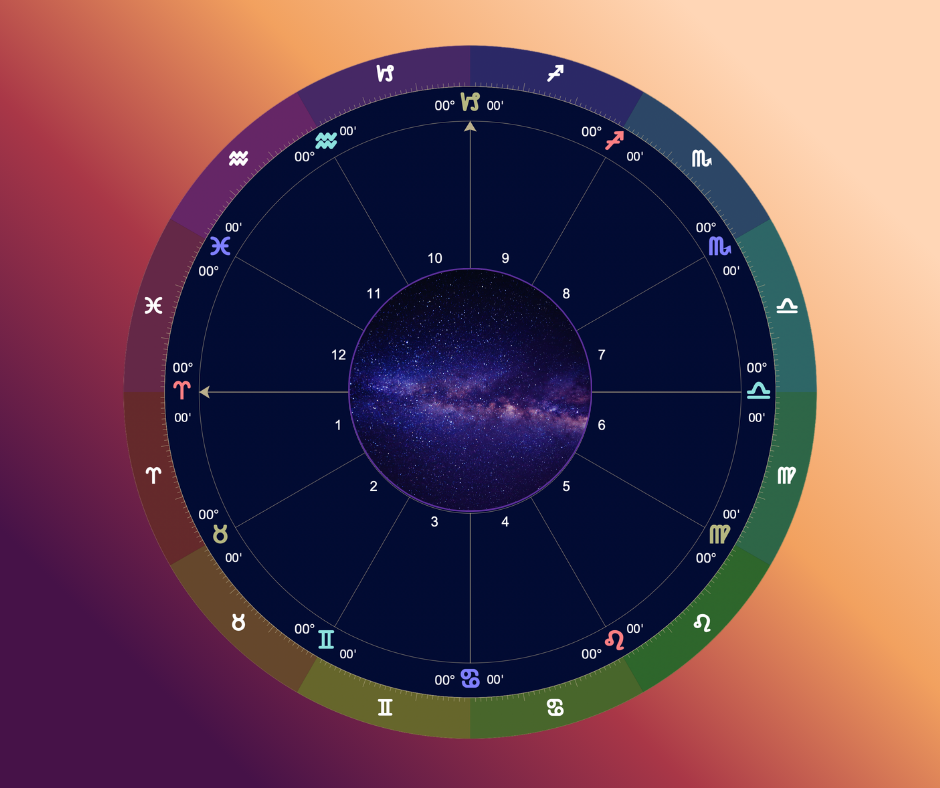
I have to share, I did not know you had identical twin brothers. And we're going to definitely riff about this because my former wife of 25 years was an identical mirror twin. Having lived with a twin for 25 years, knowing her chart by heart, and having a sense of her twin sister, her mirror twin, born six minutes later, and what that chart looked like versus hers. How do these charts mirror or describe? I just want to briefly say one thing we haven't addressed yet that many astrologers don't seem to address: what is a chart? A chart is a map of the sky. My background as a telescope builder and lifelong amateur astronomer, I've been a backyard astronomer for about 55 years now, means that for me, astronomy and astrology are not different. They are the same. A person's birth chart is a map of the sky, and therefore it's a descriptor of the season. It describes the cycles of nature, all the major cycles. Your birth sign is one, but all the other cycles of nature are there too. We were discussing this, and one of you sent us a recording of Dane Rudhyar.
Ryan
Oh yeah.
Alexander
Yeah. He was discussing for a lay audience why astrology matters. What is this, really? And when it ever comes up at astronomical conferences, which I attend a few times a year, the question inevitably is: what are you doing? Why astrology? And my quick first answer, which I think leads to other discussions, is this: if a person is born under the Full Moon as an Inuit in Alaska, at that same moment a baby born on the equator is also born under a Full Moon. These are universal cycles. They are cycles of nature that are uniform, universal, and measurable. We can't necessarily discern all the intricacies of cultural experience between an Inuit person and someone born in Papua New Guinea or in Amazonia. They're going to have different social and environmental cues. But the sky offers a place of joining. That is why astrologers use these cycles: because they are something we can astronomically understand, and they yield frames of reference for the lived experience. What we call archetypes, perhaps.
Lisa
So just a couple more quick round table questions. What's your favorite thing to explore in somebody's birth chart? Ryan, I'll start with you.
Ryan
I am fascinated by the nodal structure in a birth chart. Barbara instilled this in me. What I'm able to discern looking at the nodal structure, the rulers of the Nodes and the houses they live in, very quickly gets me to the core challenge that individual is dealing with in this lifetime, or working through. To me that is fascinating, and I love engaging with another human in that discussion to really understand how they're experiencing it. From an evolutionary perspective, you can have a certain personality type, and it's interesting where the personal planets are in the signs and where they sit. But when you start to bring that into more of the story of the soul, where we've come from and where we're going, there's so much more depth. Steven Forrest says it's kind of like the why behind the chart. We're wired this way, but why are we wired this way? Getting into the nodal structure gives you a little of that story. It also helps describe things that are so inherent in behavior from an individual standpoint, those automatic reactions we have as humans that we don't really understand where they come from. If we have a better sense of that energy in the chart, you can go there with someone and start to maybe unpack that a little bit more.
Alexander
Awesome, Ryan. I love that. Can I take his answer? We all want to take Ryan's answer.
Lisa
This is going to be a theme in this podcast, everybody wanting to copy off of Ryan.
Alexander
The Nodes are very, very powerful. For me, I think my first answer is the chart gestalt, the whole overall chart form. The placement of planets in the map, what's visible on the chart astronomically and what is under the local Earth horizon. What's seen and what is not seen, that interweaving, the whole chart form. That's probably what I land on first.
Lisa
And for me, I learned from our teacher that I have to actually draw the aspect lines. There's something kinesthetic about how I connect to a chart. If I just look at it without any lines, I don't know what to do with it. But once I draw the lines, something usually stands out immediately, and then I go straight to Pluto. I love Pluto, and no surprise that I'm now exploring all the dwarf planets as octaves of Pluto and beyond, because I want to know where this person is transforming. What are they digging into? Where are they being rebirthed? What is being created? And then I go to Saturn. How are they going to structure it? What are they restructuring in their life? So if I see something that really sticks out once I draw the lines, I go to that, but I will always dive right into Pluto first.
Alexander
I didn't know that about you. That's where you went. Yeah. I just think that's where the rubber meets the road, because you're going to transform whether you want to or not. And perhaps that's why, in my own birth chart, my Ascendant at 7 degrees Virgo has Pluto at 7 degrees and the North Node at 7 degrees. So the North Node and Pluto are both things I have a particular passion for in a chart. I relate to them as symbols for my own lived experience, which is what astrology is for everybody. I'm really truly getting you both. Pluto is the deep dive. And I think this is kind of the juju and the juice that led us to working together, this idea of diving deep. What is the soul's experience here? What is this consciousness we're having? What is consciousness?
Lisa
So, a fun question. What's your least favorite question a client will ask you? Alexander, do you want to go first?
Alexander
It would be the antithesis of what we just were chatting about. I think the least favorite question is something like: will my daughter or son have a happy life? Will they get married? Will they have children? Will they have wealth? Will they be okay? And of course, I head down a different path in how I start to address it, but often they just want me to say what's going to happen to them. That rates highly among my least favorites.
Ryan
My response ties into what you're saying. Sometimes someone will come to me and say, "Is this bad? Is this good?" All of a sudden it's set up as a black and white situation, two viewpoints. And my job in that moment is to get them to step back from that question a little and say, well, this isn't about good and bad. It's about how you're approaching this energy. This is the structure of what's happening right now and what you're experiencing. So tell me about your experience. How do we shift from this idea that you're in a bad situation and start moving into: if I want to change this, what do I need to do? How might I need to change my thinking about this situation in order to move through it differently? The challenge is when individuals come in with a fixed concept of what astrology is going to tell them. And granted, it can do that, scarily accurately sometimes. But my interest doesn't lie in making predictions, because at the end of the day my goal is to raise the consciousness of the person sitting in front of me. Not to get them stuck in a pattern of cause and effect, because I did this, this thing will happen, or I'm trying to prevent this from happening so I must do this. That doesn't get anybody anywhere. Nobody grows in that situation. And I think there's an opportunity with the client who comes saying, "How is my daughter's life going to be? Are they going to be wealthy?" Well, indications might point to maybe, but what are you more interested in, their wealth or their happiness?
Lisa
Yeah. I think it's like: what's going to happen to me this year, or how do I get my son to do this? And I'm like, well, why don't you understand your son first? There are a lot of those types of questions. And I mean, I'm guilty of those types of questions too. We're human. Sometimes we just want someone to give us the answer. But I was on a quest to find out my life purpose, life purpose, life purpose. And finally a psychic said, "I can't tell you your life purpose, but it has something to do with children." And that actually led somewhere, you know? It's interesting. I think it's fun to go to 20 astrologers in a day and they're all going to point out something different about you.
Alexander
Amen.
Ryan
Through their lens. And that's the beauty of what I love about astrology. Alexander, I told you this, and I mean it from the bottom of my heart, no one has ever described my chart the way you did yesterday. Talk about going deep with that Pluto on the Ascendant, North Node on the Ascendant that you have in your chart. Your ability to hit some of the key themes from a family pattern in my chart that no one has ever been able to do, and I've had many readings by many very well-known astrologers in my lifetime.
Lisa
But that's the beauty of a different viewpoint. I love that each of you brings something unique to that process. Clients come into our lives at certain times because they need that specific language, and they may need to go to somebody else for a different language, and that's okay. You will attract the people who are dealing with the life circumstances that you are. It's a co-creative healing. We oftentimes get so much from our clients, as much as we give, we receive.
Alexander
I can triple that. Truly. For many years I have said: if I'm not growing in the session at the same time that my client hopefully is also growing, if I'm not growing in consciousness and self-awareness, there's no magic in the session. There can only be that joining on a soul level if I'm in the process along with my client. If I'm in the washing machine, in the place of self-review, right alongside them. And that is part of what this language of astrology opens up, particularly Western humanistic astrology, that particular mindset.
Lisa
Well, this seems like a good place to wrap up this first episode. Hopefully this gives the audience a taste of who we are. We're going to dig into who we are and, hopefully, who you are as an audience member. One of the things we really want to do with this podcast is give you things to think about in your own life. And we're genuinely interested in finding out what topics you want to explore. So please leave comments and questions. We have a variety of topics we're already planning: twin charts, something in the news from a consciousness perspective, and a lot of different ideas that have been floating around. But we wanted first to connect with the audience and give them an idea of who they're tuning in to listen to. So we hope you come back. Thank you.
Alexander
Thank you, folks. Great to be with you. Dear Lisa, dear Ryan, I so appreciate your sharing. It was really touching. It's very human and humane, and that may be the most important piece of all that we can impart to our listeners and our audience. We need more of that in the world today. Thank you, folks.
Ryan
Thank you.
Lisa
Thank you.
If you are ready to explore your chart in conversation — to understand your specific patterns, your timing, and your developmental direction — I’d be delighted to work with you one on one.
“At its heart, evolutionary astrology is not about prediction or personality labels. It is about awareness. Agency. And the ongoing process of becoming more fully yourself.”
New to evolutionary astrology?
Start here for free.