Episode 3: Astrology, Consciousness & the Barbault Basket

Synopsis
Astrology gets dismissed as fortune-telling more often than it gets taken seriously as a tool for growth, but Ryan, Lisa, and Alexander are out to change that. This episode opens with a look at how each of them actually works with clients, using the birth chart not to predict what's coming but to help someone become more fully themselves. From there, the conversation widens to the Barbault Basket, a rare alignment of four outer planets forming this July that's got the astrological community buzzing. Settle in for a conversation about growth, timing, and what the sky might be asking of all of us right now.
Full Transcript
Ryan
Welcome to Astrology Off the Charts. We are three professional astrologers, friends, and lifelong students of the human experience, exploring astrology through thoughtful conversation. We're glad you're here. I'm Ryan Barrett.
Lisa
I'm Lisa Hagenbuch.
Alexander
And I'm Alexander Mallon. And it's wonderful to have you join us.
Ryan
Thank you. So today's conversation is one that we've been looking forward to, because it sits at the intersection of two things that we love talking about collectively: how astrology works on a personal level, and how that same lens can be applied to something much bigger. So we're going to start today by talking about each of our approaches to client work, what humanistic astrology actually means to us, how we work with clients, and what sets a session with each of us apart from what a lot of people might expect when they think "astrology reading." Astrology can help us understand what's being asked of us, whether that's in an individual birth chart or in a collective moment. This is a lens through which we can observe the human experience. So let's get into it. Alexander, we were talking before we got started about cycles, can you explain a little about what you were talking about?
Alexander
Yeah, so for the audience, as we were prepping, we were reviewing the message to give for those of us who are fellow students of astrology. I always kind of tongue-in-cheek say no matter where you are or how long you've been practicing or studying, it's such a vast art form and a vast study, astronomy, astrology, cycles, and meaning, that we're all students. I think oftentimes, Lisa and Ryan, when we engage students or clientele, or when we're asked to publicly speak or lecture, there's an idea that astrology talks about cycles that are "creating" something, that astrology is doing something. I always want to clarify, as a backyard astronomer myself, an avid astronomer with telescopes in my own observatory, I'm literally there, physically experiencing the nighttime sky, which many astrologers might not be. But in a way, I'm "earthing" it. For me, and for all astrologers really, we're looking at cycles simply. Astrology is looking at the cycles of nature. Often, when I work with clients, one of the first things I'll talk about is the moon placement in their chart, how that moon phase they were born under repeats every twenty-nine and a half days. Half the world's population, around age twelve, comes to intimately know that rhythm. It's so foundational we forget about it, it's so natural. Well, that's what astrology does. It looks at these cycles of nature. Astrology is fire and stars. How long has astrology existed? In a formal, historical format, five to ten thousand years. But how long has astrology really existed? Fire and stars, you have your fire, you have animals, you have prey, you have the season, and you move with the season. Astrology, astronomy, is observing those cycles of nature that we're a part of. Not something external to us at all, we're born into it.
Ryan
We are a part of it. There's a phrase that Lisa, you and my former teacher used, and Steven Forrest uses it all the time, that astrological symbols are verbs, not nouns. That speaks to this idea that there's movement to it, that it's ongoing, it's an action. It's not just what's happening around us, it's helping us access that moment in a way that's very dynamic and invites conversation. It invites us to experience it differently than we normally would. It's not just something happening to us, we're co-engaging with the moment around us.
Lisa
Yeah, and I think that's what's really important about our approach, because a lot of people come to us thinking we're psychics, that we're just going to sit down and tell them their future. So it's a process sometimes to get clients to buy into this, because they're like, "Aren't you supposed to be telling me everything?" And it's like, but how could I know you better than you know yourself? My biggest compliment is when you leave and say, "You just confirmed a lot of things for me." That's a great place to start in a long-term relationship with a client, I think humanistic astrology really sets up those conditions.
Alexander
And you mean humanistic astrology in comparison to predictive astrology, that predictive work is about cycles happening at us or to us, and what might happen, versus humanism, which is: how might we happen to it?
Lisa
Yeah, because if somebody's just coming to get their next six months of predictions, oftentimes we're just not able to tell them that with certainty. And if it doesn't happen the way we said, they're not going to come back. But with a humanistic approach, it's about the ongoing evolution of their consciousness, as well as the consciousness of the relationship between the two of you.
Alexander
That said, with practice and experience, observing how multiple cycles are typically happening and how a person's chart describes their engagement with the cycles of their life, we might well be able to discuss what's unfolding and where that might take them. But that discussion could lose the thread of the meaning, the growth, the soul evolution, how you're growing in this, where you are in the growth experience. I think about Ram Dass, the American guru, he'd talk about watching yourself from above, almost imagining yourself living your life and observing: "Oh, there I am. Oh, I'm with him again. Oh, let's watch this unfold."
Ryan
Yeah, no, I love that you brought that up, because one of the things Ram Dass might pull it back to is: this moment is all that matters. Accessing this moment in a way that's different from how we'd normally access it, by taking a step outside of ourselves and looking at it from a symbolic perspective, gives us an opportunity to experience it a little differently. There's so much value in that, especially when you're working with someone having a very challenging personal moment, understanding that this too shall pass, that things aren't set in stone, that it's constantly moving and evolving. How we bring our attention to that, and understand that we can participate in the moment in a different way, that we can help direct it consciously and thoughtfully, that opens up possibility for the client and for the person we're engaging with. That's something I hold very dear as an astrologer. There's a great responsibility in being able to carry on a conversation that's inviting and compassionate, that allows the person to experience what they're going through, while offering the possibility of how we might direct this differently.
Alexander
I was watching a video with my partner last week, I believe it was Eckhart Tolle, and at one point he said that if we're centered and aware of our being present, involved in the movement, our projections and our creation, that we're the perceiver and the experiencer, from that standpoint we grow, we co-create. I'm paraphrasing, but he said if you live your life in a more typical way, then life is just one damn thing after another. He was inviting engagement rather than simply being under the umbrella of it.
Ryan
I have a question, Lisa, I'm going to direct it at you first. We've talked about what got us initially interested in astrology in our last episode. I'm more curious, going forward, what drew us collectively to humanistic astrology, to evolutionary astrology, what was it about our path that led us there?
Lisa
For me, in a way, it was a little luck of the draw, and we talk about fate versus free will, because in a former episode I mentioned I was sparked by a woman, Barb Krofel. She was very predictive and psychic, as I found out, but she wasn't teaching, I would have loved to learn from her. She told me to go find somebody who teaches an adult-ed class, and I found Barbara Junceau, a night-and-day astrologer. I was grabbed by the fact that, I'm an Aries moon, I like to be self-directed, she was about taking these energies and co-creating with them. That's what grabbed me, because you don't know that piece of it at the start. I think it just happened to be the only person I could find teaching a class, and I stuck with her for a very long time. I've had other teachers who were a bit more classical, more fate-based. When I saw the juxtaposition, someone I really admired gave me a reading and said, "Well, of course you would do this, " and I thought, "I would never do that." It made me think: I really need to stick with consciousness, and interact in a sacred conversation with somebody.
Ryan
Alexander, what about you?
Alexander
So, in one of our last introductory episodes, folks, this is the third of the three intro episodes as Ryan, Lisa, and I are launching this effort, Astrology Off the Charts, I'd reiterate one of the things we talked about. For me it was the angst of teenage years, the angst of family issues. Honestly, that's what spawned my first podcast, Astrology of Family Karma and Relationships. It really was the challenge of family, and what I was going through in my teenage years, how do I frame myself, what I'm experiencing and perceiving, versus what's being said by the family of origin, or the school system, or the age group I was in. When I began studying at fifteen, it was very different for me, my peers were more concerned with sports in high school, and I was concerned with the origins of consciousness, the work of Carl Jung, why we're here, how to make sense of it. Once I began to investigate my own birth chart, as most of us in astrology do, it provided a frame of reference that was universal and personal at once, my nature, literally born into nature and the family around me, but also their experience, their birth moment in nature and in the family system, and how those individual identities, even the proverbial birth-order issue in a family, all meld together, and the chart mirrors all of it.
Ryan
Even some of the more predictive astrologers I've worked with, it can be almost scarily precise, looking at things like birth order, how many siblings you're going to have, what your parents are like. I want to be really clear: there are so many different pathways in astrology that are useful and helpful, and if you follow the discipline methodically, you'll learn all these things, and there's value in that. But I think there's an opportunity, too, at its heart, evolutionary astrology isn't solely about prediction or personality labels. It's about your awareness and what you bring to that. It's about agency. The goal for us as humanistic and evolutionary astrologers is to facilitate someone becoming more fully themselves, discovering who they are, and then deciding what they want to do with that. One of my favorite ideas, when we look at planetary functions in the chart, is Uranus, the question around it is: who would you be if you didn't have those tribal impressions telling you what you should and shouldn't be in life? Uranus helps you see what's possible. That's always how I've been wired, that's what I'm interested in doing. Other people are more interested in helping predict events, or helping someone choose the exact right time for something, and there's value in that too, it's important. It's not that you shouldn't go down those other roads, do whatever interests you, as long as it's not hurting anyone. But I was drawn to this when I started studying with Barbara. She used to say, life isn't about what happens, it's about how one responds to what happens and how one develops their consciousness around that. That always stuck with me.
Lisa
Lately, I’ve come to the conclusion that, I could give somebody a list of dates and tell them exactly what's going to happen, but if they've got limiting beliefs, unconscious blocks, generational family patterns, it's not going to play out that way for them. It's about getting their energy patterns into flow, alignment, and balance. I love astrology because you can take these symbols, they're archetypal, and dig into the energy without having to know the whole story, the trauma. There's so much you can get done in an hour with somebody, because you can just describe the characteristics and say, "If you counterbalance it with this, it'll be more in flow, " and then life, relationships, all of that tends to flow better.
Alexander
You have me thinking, when an astrologer who's particularly humanistic, as we three are, looks at a client's chart, or our own chart, the chart is a symbol for what was happening in the family system when you were born into it. It describes mom and dad, where they were in their growth, in their relational connection, where they were in the world at large, and this event of a baby entering that system. As you're saying, Lisa, it brings up an objective mirror to what we went through in our birth and earliest years, and how we're part of that unfoldment. Every birth is a major event for mom and dad, and we're part of that, that's why birth order, oldest versus youngest, the middle child, is a different phase, a different cycle. Astrology charts always describe these phases and cycles of growth for each person, and also when we entered them for mom and dad. If you have mom's chart and dad's chart, it's even more powerful, like having your spouse's chart, you can really dig into the objective mirror for each individual. But the individual's birth chart has that whole archetypal root ball in it too, it's intergenerational in one person's chart.
Ryan
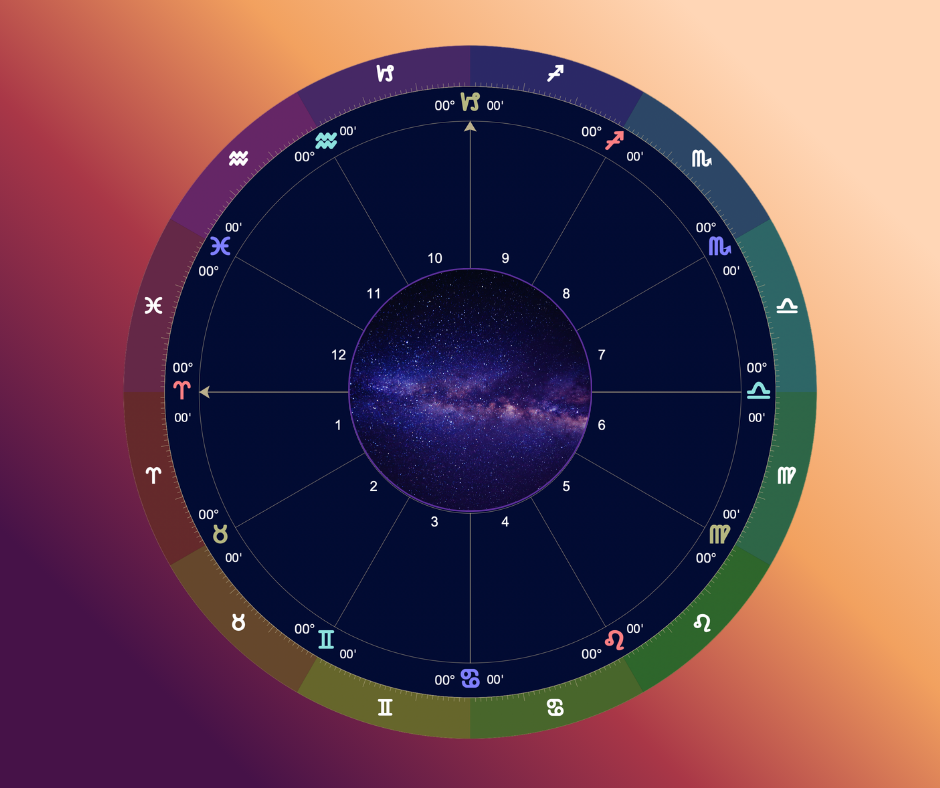
You really opened my mind to that when we worked together, Alexander, I appreciate that perspective, because I was taught it, but until I saw you unfold it in my own chart, I didn't understand it as well as I could have. Thank you for that. What you're talking about also brings something up, I saw it today, I think it was Christopher Renstrom talking about cycles and time. He likened the zodiac wheel to a clock, if you didn't have the planets, the "arms" of the clock, you'd just see the zodiac and wouldn't know what time it is, where we were in the cycle. All the ancients developed some form of astrology to understand time and cycles, the actual clock they were looking at was the sky. That's the prime symbol in astrology, the sky above us, and for some, the sky below us as well, that's literally the chart itself.
Alexander
Exactly, the chart literally is that. And I could tell you, as a backyard astronomer, everyone's birth chart is a literal map of the seasons and cycles and the sky above your head. Your birth chart is a literal scientific sky map that describes the moment you entered that family system.
Ryan
It just blows my mind. When we talk about what that opens up, this moment-to-moment symbology we can see that's constantly changing and evolving, and then layering on other techniques, like secondary progressions or solar arc directions, these are symbolic ways of looking at how time continues to unfold from that moment, whether it was a birth or an event, even the beginning of this podcast, we can see how that will unfold over time symbolically. There's something beautiful about that, in terms of the grand design of the universe, and I love that you use this term too, Alexander, Great Spirit, that the universe has some design to it, and we can tap into that as humans through this language of astrology.
Alexander
It brought us together, Ryan with evolutionary astrology, and Lisa with her humanism and the family constellations work she specializes in as an astrologer. These philosophical, psychotherapeutic ideas and systems that all three of us have training and schooling in are married to the consciousness of the astrologer, the astrologer perceiving the client and interweaving. In a nutshell, I say to my clients that I'm hopefully always growing in every session, because if I'm not growing while my client is being challenged to grow, there's no juju between us, no upliftment, no flame of awareness in the session. It's not just being in the hot seat, it's that flame together, that juncture between the client and the astrologer, the client and the therapist, the priest and the patient. It's that magical connection.
Lisa
And it's amazing, I don't know if you two have found this, but you'll attract the clients who are experiencing the life circumstances you're going through. That's not by accident. A sacred conversation tracks through time. I'll interject a story about myself here or there, and that sparks something, I think the sacred conversation has a lot to do with connecting heart-to-heart, knowing that their challenges are challenges you have too. That's part of the human experience, hence, humanistic astrology.
Alexander
And our trinity, folks, for the audience, the reason we have these three intro programs is to bring you into our juju, how we came together, and what we wish to share with you. It's that relational magic, you're a humanistic astrologer, a person who brings your spiritual, philosophical passion, your sense of soul and spiritual self, to your work. It's important to you. Others may address the mundane, stock market astrologers do stock market astrology, but it's not about their personal evolution. It serves another purpose in their case.
Ryan
I want to pivot a little and ask this, we've touched on it, but how would you describe what a session is like, to a potential client? How do you work with clients? Lisa, do you want to go first?
Lisa
Sure. I describe it as energetic talk therapy, my process has really evolved over time. I've added in energy modalities of my own, like qigong, or meditation, which I think increases my intuitive ability for messages to come through. I don't prepare much anymore. I physically draw the aspect lines, sit down, and ask, "What are we talking about today?" I want it to be relevant, I don't want to just talk at you. I can talk at you as an astrologer for five hours, but why are you here? Why did you want to schedule a session? I have some clients I've been processing with for a lifetime. I don't have training as a psychologist, I wish I did, but I don't feel I need to get into the specifics of how to process something. We're just describing the energies involved, and how to get them into better flow, and take that into other practices you do. So anymore, I just think of it as a sacred conversation. The more I get out of my own way and stay in the moment, not just the consciousness of the chart, but the consciousness of the person in front of me, that's where the magic is. It's gotten less and less structured over time. I bring in tarot, pendulum clearing, other modalities, because I'm not only interacting with the personality, there's a soul in there I'm talking to, across lifetimes.
Alexander
Yeah, Lisa, your question has me cogitating, thinking, reviewing, stewing a little. I love that word, by the way. Your question, Ryan, has me thinking of one of my earliest teachers. I actually heard him on the radio, I grew up on Long Island, and there was this incredible radio show with different astrologers and psychics as guests. One of my first teachers came through that show, I went to him for a reading in Manhattan, and was subsequently a student of his and others for a few years. He was a phenomenal psychic, truly stunning. I've been around for many decades in this field, and he was a whole different caliber, more like a guru in terms of his gift. He could basically read everybody's mind, not just when you were with him, classes were about what you were going through in your life. During class he'd bring up sentences, I remember once, in an argumentative situation with a girlfriend in my late teens, the exact statement I'd used to place my position, he shot it right back at me. It had happened five days earlier, and it hadn't even occurred to him consciously as he said it, but I realized, "That's exactly what I told my girlfriend four days ago." I'm partly regurgitating that experience, it molded my intent, which was to let the chart speak, to let it be a vehicle of intuition. I'm definitely high on the intuitive end, I could do a straight intuitive session, but the chart rounds out and provides depth and perspective. My intent is to leap into the deep end of the pond right away, because I feel most clients have done a lot of personal work, growth work, self-reflection, therapeutic work, and are seeking, my intent is to bring them to a place they've approached but haven't fully delved into or thrown themselves into. With my Pluto rising, my intent is to take them right there, to speak with them and let the charts speak together. So I do a little training, a little teaching, before we launch into looking at the chart together. It's a growth phase, like an earthquake, this tsunami of experiencing and feeling and reviewing through a different perspective. My intent is to crack open the doors of awareness, "oh wow, we're living this, we're reviewing this", and the meaning and perspective of my life. And how about you, Ryan, what's your approach?
Ryan
It's evolved over time. When I was younger, I used to move around the chart, look at the different points, and talk about them as a system. I think the integration really came in my twenties, studying with Barbara, Barbara Junceau, for those listening, who is no longer with us. She had you look at the karmic path within the chart first, where's the north node, the south node, she'd physically draw a line through the chart with an arrow pointing toward the north node, and everything else hung off that. Right, Lisa? What I found in doing that was exactly what you're talking about, Alexander, going to the heart of the challenge for that soul in this lifetime. What you don't know is how they're responding to it, how they're dealing with that energy in their own unique way, and that's where the interaction is critical to a meaningful discussion with the client. So my view now, I always start with a tarot card pull. It helps me connect, similar to what you do, Lisa, in asking what they've come here for. I pull the card, sometimes more than one, and show it to say, "I know what you're going through." That's an access point, you immediately get some credibility with the client, and then you can have a conversation about the chart instead of them sitting there waiting for you to "read" them. I feel very strongly that everybody has something unique to offer this world, and if you can uncover that over the course of a reading, an hour, ninety minutes, and help the individual understand how special and unique they are, that what they're hearing from the outside world may not be helping them evolve into their chart, if they can shift their perspective on a particular issue within their birth chart, that opens up possibility. I think astrology makes timing visible, the timing of the cycles of someone's life, and it's one of the most precise tools out there to help someone find their way back to themselves and what they came here to do. I hope every client walks away with that sense.
Lisa
I think the commonality we all three share, even if we have different starting points, is that as a humanistic astrologer, you're more present in the moment, following the thread of energy around the chart, while also providing the dates, the cycles, the timing. You have to read the chart in the layers of consciousness the person is presenting to you. You can have something planned as a good place to start, but then it leads you here and there, that's the beauty of consciousness, you don't know where the moment, the chart, the person, is going to take you in the session. The most surprising sessions are often the most fun, it keeps it vital. Every session, you never know what you're going to explore, but there's magic in it.
Ryan
There is. I'm going to pivot us even further, at the beginning we talked about the personal level, how we interact with clients. I want to bring it out to something happening in the world right now: the astrological community is buzzing about something called the Barbault Basket, a rare planetary configuration that's been getting a lot of attention, some of it fairly dramatic. I want to talk about what it actually is and what it means, because specific configurations that are auspicious from an astrology lens really open up an opportunity for conversation, we touched on this last time, but I want to share it again. I'm going to share my screen, this is the Barbault Basket, a configuration of four outer planets: Jupiter, Saturn, sorry, Jupiter, Uranus, Pluto, and Neptune, forming a basket-like pattern. It happens July 19th–20th of 2026. It's named after André Barbault, a French astrologer known for predicting in 1955 that a major restructuring tied to the Soviet Union would happen in 1989. He also flagged the collective crisis around the 2020 pandemic. A lot of the current commentary frames this as a utopian turning point, but Barbault's original framing was more grounded, he called it the end of a long depressive cycle and the start of a structural reorganization, not something sudden happening when the configuration appears in the sky. Curious about your thoughts, relative to what we've been talking about with consciousness and humanistic astrology and cycles, do you want to go first, Alexander, or should I?
Lisa
Well, number one, this whole transit is part of a larger unfolding, it's beginning at the first degree of the sign, we're now at the fourth degree, and the third pass we'll talk about in a future episode is at the sixth degree, with all the outer planets, Uranus, Neptune, and Pluto, changing signs. It's a very interesting time in terms of how much in your consciousness and daily life is changing. In theory it's very positive, we get sextiles and trines, but that opposition from Jupiter to Pluto is about: maybe you've become too complacent, and we're going to shake up your consciousness, create some situations, and you're going to have to make choices. Are you going to stay there, or really jump in and work with these energies in new ways? Yeah, that opposition between Jupiter and Pluto really stands out. In the third configuration we'll cover in a future episode, it's calling for expansive, deep transformation, playing with these energies is really affecting people with planets in that one-to-six-degree range; they're probably being called to greater transformation in those areas.
Ryan
Any oppositions or squares to those points might be friction points, depending on how people are experiencing this energy.
Lisa
When the faster-moving personal planets transit through this configuration, they'll jumpstart that in those areas of your life. As with everything, you have to plug this configuration into your personal chart to see what life areas are most affected.
Ryan
Any thoughts, Alexander?
Alexander
Well, the first thing that crosses my mind is that our first two shows together, and really the essence of how we came to be a trinity in our work, by coincidence, though of course that's how astrology is, these cycles are literally coincident with a person's evolution. In a grounded way, every human being will have Saturn opposite Saturn at age fourteen, there are cycles we all have that astrology coincides with. When we talk about Neptune, Uranus, and Pluto, they coincide with the transpersonal, the collective, Pluto is infamous for being generational, describing each generation, the "Me" generation of the sixties, the Gen Xers, and so on. These outer body planets, not visible to the naked eye, are beyond the immediate, ego-level assessment, they're transpersonal, part of the individual but beyond the individual. They symbolize where we connect with our inner soul, spirit, and the collective. There's a major configuration with Neptune at the middle, called a minor grand trine, or a "transcendent" grand trine, happening, a collective configuration of 2026. The Barbault Basket has that twelve-year Jupiter cycle connecting with this massive trinity of planets, Neptune, Pluto, Uranus, the planets that symbolize transcendence in our charts. By coincidence, we came together and discovered we're all really about transcendence, about astrology that's about the individual and the collective, the collective in the individual, the transcendence of consciousness, the awareness of the journey, not just what I'm going through, but how do I relate to it, what's the meaning? So the Barbault Basket is highlighting, in jovial Jupiter cultures, "jo", that Jupiter cycle of expansion. Jupiter cycles happen every twelve years for everybody, age twelve, twenty-four, thirty-six, that's the individual's expansiveness. I also love that the glyph for Jupiter is the same symbol a doctor signs when writing a prescription, it's an upside-down Jupiter symbol, invoking Zeus for healing. I've never met a doctor who knows that little script symbol is invoking Zeus for healing, but that's the origin of it. So Jupiter is about the collective, the individual, the healer, growing beyond. That's one phenomenon about the Barbault Basket. The other thing that leaps off the page is that half the wheel is occupied by these four planets, and half is empty, describing the collective in some unified way, and then the pregnant possibility of the empty part, the variability, the consciousness shifting into. It's an interesting pattern, and as you both said, Ryan and Lisa, one of the biggest patterns of our lifetime in this century.
Ryan
Yeah, agreed. And just playing off that a bit, when you mention the symbol for Jupiter, from a literal standpoint it looks like the number four, and all these planets are sitting at the fourth degree of the signs. The other thing I'll point out is, relative to the elements, we've got two air signs in harmony with two fire signs, with air and fire on one end in opposition to one another. There's this idea of fire pushing things forth, birthing something new, and air bringing forth new ideas, the collective energy of the moment feeding off each other, and the lack of that on the other side, all the earth and water not part of this makeup. It also speaks to what the basket is holding space for, what it's carrying. Everything you're talking about, I think it's important to note that Barbault's original reading of this was signaling a new era taking shape, not a sudden utopia. What we've been talking about speaks to that, disruption is likely. There's an ending of this patriarchal vision of society, the way our current structures are within society, we're understanding that's not necessarily going to help us as we move forward. There's a new era ushering in, and the structures and hierarchies we had before are falling away in a very real way. Religion is shifting and changing. People's ideas about society, the top one percent, the masses rising up and saying, "What about us, what about our individual perspectives? We have value, and we're not here just to support a system that isn't working anymore." There's a shift toward meaningfully different structures, which probably won't fully play out until the late 2030s.
Alexander
Right, this cycle runs through 2033 particularly.
Ryan
Right, exactly. And so the systems currently hanging on by a thread are getting tested, and I think that'll continue. The old era is going, and we're seeing a lot of the backlash of that, when the pendulum swings hard in one direction, it comes back, and we're starting to see that turning point. It'll be interesting to see how humanity works with this consciously, because that determines the quality of the output, the outcome is always determined by the quality of consciousness placed into it. We talk about that with clients daily. The same thing's going to happen here, what is the collective consciousness of the moment, and how do we want to shift it in a meaningfully positive way?
Alexander
This trinity, Neptune, Uranus, Pluto, whose cycles correlate with mass consciousness and mass consciousness shift, particularly Neptune and Pluto, correlates with major civilizational resets. We'll talk about that in subsequent episodes, briefly, around 500–600 BC, the Axial Age, the birth of the Buddha, the birth of the Upanishads in India, concepts of spirituality and the sense of spiritual man in the environment, that's in a way being replayed now, with world culture, AI, and world communication, the confluence, as you were saying, Ryan, of modern western society and indigenous societies that still exist on this planet, societies that are being given technology, brought into the worldwide web. That's this massive collective re-evaluation you were addressing before.
Lisa
Yeah, and on an individual level, if you think about Uranus, it's about the individual individuating, becoming their own authority, speaking their truth; it's in Gemini. Neptune is our creation energy, in Aries, how do we want to create our lives? And Pluto is how we want to step into our empowerment as an individual. The more we work with clients on shifting their individual consciousness, the more expanded the effect on the collective.
Alexander
This is the "as above, so below" coincidence of these cycles again, Pluto discovered in 1930, plutonium in 1945, and we see the end of World War II and the atom bomb, fission, and now in the twenty-first century, not fission but fusion. Even the fusion of modern western and indigenous culture is this call to action, as above so below, the material world is about fusion, the world culture of communication is about fusion, and what that means for the individual, one's inner fusion, so to speak.
Ryan
Yeah. Regardless of what the collective picture looks like, this is about, similar to what we'd do in any session with a client, what is the moment asking right now? What is the season asking? How can you become more fully yourself
Alexander
And how are we interweaving with the collective? I've been sitting with clients recently thinking about World War I, World War II, the summer of love and Woodstock, PBS was just airing a film about Woodstock, the collective coming together, Vietnam, then Woodstock, it's a reiteration, the coincidence of it. How is one coming together, the cycles in the US chart, or Great Britain's chart, or China's chart, and how does that relate to what's happening for me as an individual? That's the work we do too, the outer and the inner, and the coincidence of that.
Ryan
One last thing I'd like to say, in terms of experience and perspective: sometimes it can feel, at an individual or collective level, like what we're going through is violent, difficult, and messy, and that's a valid experience. Many times we look back in history and say, "This was a time of enlightenment, " that came out of a very bad experience. Part of the perspective we can give individuals, and take at a collective level, is that sometimes change is difficult, sometimes it feels violent and messy, but understanding the bigger picture of what's happening in that moment, and astrology gives us that lens to look at the intent behind the moment, helps us understand this is bigger than the individual experience we're having right now, and that we need to keep moving forward, understanding this is a cycle, and this too shall pass. That's something we have a responsibility to share with our clients.
Alexander
Amen to that.
Ryan
Thank you, everybody, for joining us. We really enjoyed talking about this subject with you. As you hear what we're talking about over the next few episodes, if you have feedback for us, or want to hear different topics, we really invite you to engage with us. We may have individuals join our discussions in the future as well, but we'd love to hear from you, is this resonating with you, would you like to hear more of this, different topics? Please share that with us. Thank you for your time.
Alexander
Indeed. Blessings.
Lisa
Thank you.
If you are ready to explore your chart in conversation — to understand your specific patterns, your timing, and your developmental direction — I’d be delighted to work with you one on one.
“At its heart, evolutionary astrology is not about prediction or personality labels. It is about awareness. Agency. And the ongoing process of becoming more fully yourself.”
New to evolutionary astrology?
Start here for free.