Your Chart Doesn't Get to Decide What Happened to You
A Reddit thread caught my attention recently. Someone posed a simple question to a community of experienced astrologers: why do some astrologers choose not to share their birth charts publicly? The answers ranged from privacy concerns to fears about magical attack. But buried in the comments was something that sparked a question I keep coming back to.
Someone mentioned having a tight Pluto conjunction to their Sun. Strangers had told them this meant they were likely an alcoholic, or came from a broken home, or carried some dark, unshakeable wound. The assumption, apparently, was that their father must have been the source of that darkness. "Which isn't true," they wrote. "He loved me and was never afraid to show it, and I was his favorite." Another commenter shared that a 12th house Moon had led people to assume they had a terrible relationship with their mother. "We are so close," they said. "She's like my best friend."
These are not fringe experiences. They are what happens when a living, dynamic symbol gets treated like a verdict.
The spectrum problem
Every placement in your chart exists on a spectrum. That spectrum runs from its least integrated expression all the way to its most conscious, most evolved form. A Pluto-Sun conjunction can describe someone consumed by power, yes. It can also describe someone with an extraordinary capacity for transformation, depth, and regeneration. Both are true of the same symbol. Neither is the whole story.
When an astrologer looks at a placement and lands immediately on the shadow end of the spectrum, they are not reading your chart. They are reading their own assumptions about what that energy looks like when it goes wrong. And they are handing you those assumptions as though they were facts about your life.
This is the core problem with "bad placement" thinking. It collapses a living archetype into a single, fixed expression. It mistakes one possible story for the only possible story.
Symbols are verbs
One of the principles I return to again and again in this work, adapted from Steven Forrest's foundational writing, is that astrological symbols are verbs, not nouns. You are not "a Pluto-Sun person" the way you might be left-handed or born in Chicago. You are Pluto-Sun-ing. You are actively, dynamically in relationship with that energy, and how you embody it changes across a lifetime.
A 12th house Moon does not mean you have a painful relationship with your mother. It means you are working with themes of emotional depth, solitude, the unconscious, and perhaps a kind of feeling life that doesn't always translate easily into words. How that plays out depends on the whole chart, your history, your awareness, and what you have chosen to do with the material your life has handed you.
No astrologer can determine the quality or depth of your consciousness from your chart alone. That is not a limitation of astrology. It is one of its most important truths.
What a placement actually is
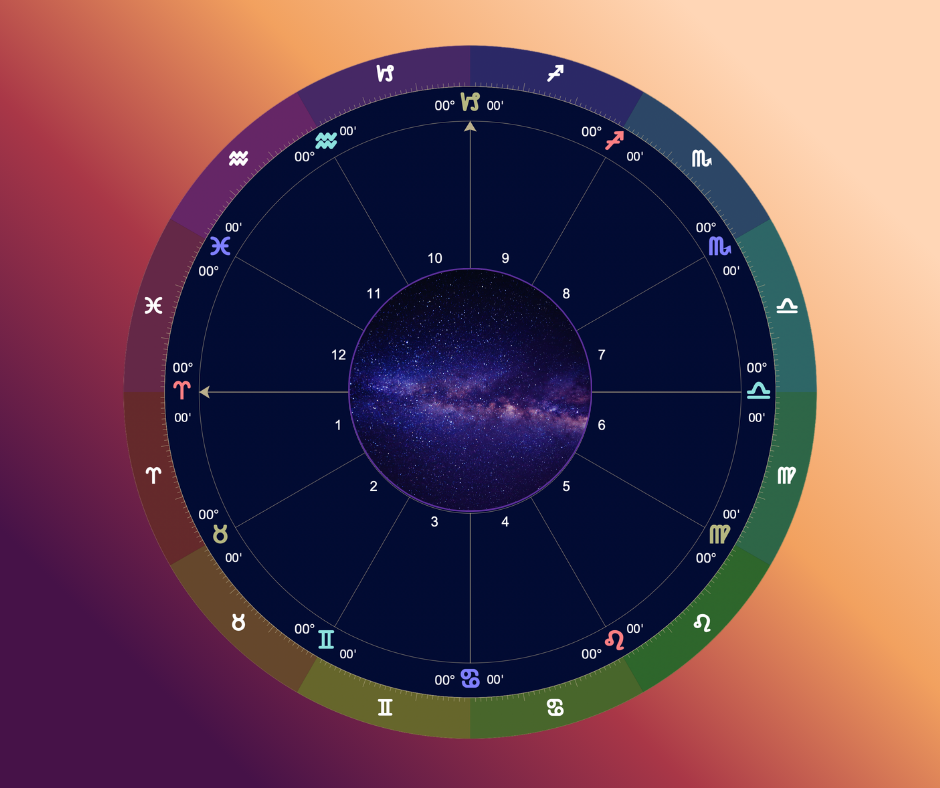
Your birth chart is a map of potential, not a map of outcomes. The planets describe psychological functions. The signs describe the direction those functions are seeking to move. The houses describe the arenas of life where that movement plays out. Aspects describe how those drives negotiate with each other.
None of that is fate. All of it is energy in motion, asking to be consciously engaged.
When someone tells you that a placement in your chart means something specific and fixed has happened or will happen in your life, they have stepped outside what astrology can actually do. They have traded a living map for a closed door.
The cost of a verdict
The people in that Reddit thread who felt reduced by how their charts were interpreted were not being oversensitive. They were experiencing something real: the particular sting of having your story flattened by someone else's framework.
Your chart carries the blueprint of your soul's design. It is one of the most intimate documents that exists. When it gets read reductively, something important is lost. You stop asking "what is this placement asking of me?" and start wondering "what is wrong with me?" That shift is not a small thing.
The question that evolutionary astrology keeps returning to is not "what will happen?" It is "what patterns am I working with, and how am I growing into them?" That reframe changes everything about how you sit with your chart.
Your chart belongs to you
A birth chart is not a personality test, a prophecy, or a list of your deficits. It is a living conversation between who you came here to be and the life you are actively building. Every placement holds both a challenge and an invitation. The challenge is real. So is the invitation.
If someone has ever told you that something in your chart is simply bad, I want to offer a different frame: that symbol is asking something of you. The question worth sitting with is “what am I being called to grow into?”
If you are ready to explore your chart in conversation — to understand your specific patterns, your timing, and your developmental direction — I’d be delighted to work with you one on one.
“At its heart, evolutionary astrology is not about prediction or personality labels. It is about awareness. Agency. And the ongoing process of becoming more fully yourself.”
New to evolutionary astrology?
Start here for free.